The Promise:
What is visible
Buy the tools, train the people, adoption follows
Why AI adoption stalls
The Adoption Mirage™ is the pattern that shows up when an organization can see that people started and cannot see whether they stayed.
Across organizations, the conditions that sustain change converge on three things: time, visibility, and ownership. The framework examines how those conditions shape what people can actually adopt, sustain, and make routine.
Buy the tools, train the people, adoption follows
Where each person actually is, which is rarely where the dashboard says they are
Who is paying the most, and what they are paying with
What has to change for the adoption to stick, and who is accountable for it
Organizations count who started. Value lives in who came back.
Organizations see first use. Value lives in return.
Two journeys run simultaneously, and only one of them is visible from the dashboard.
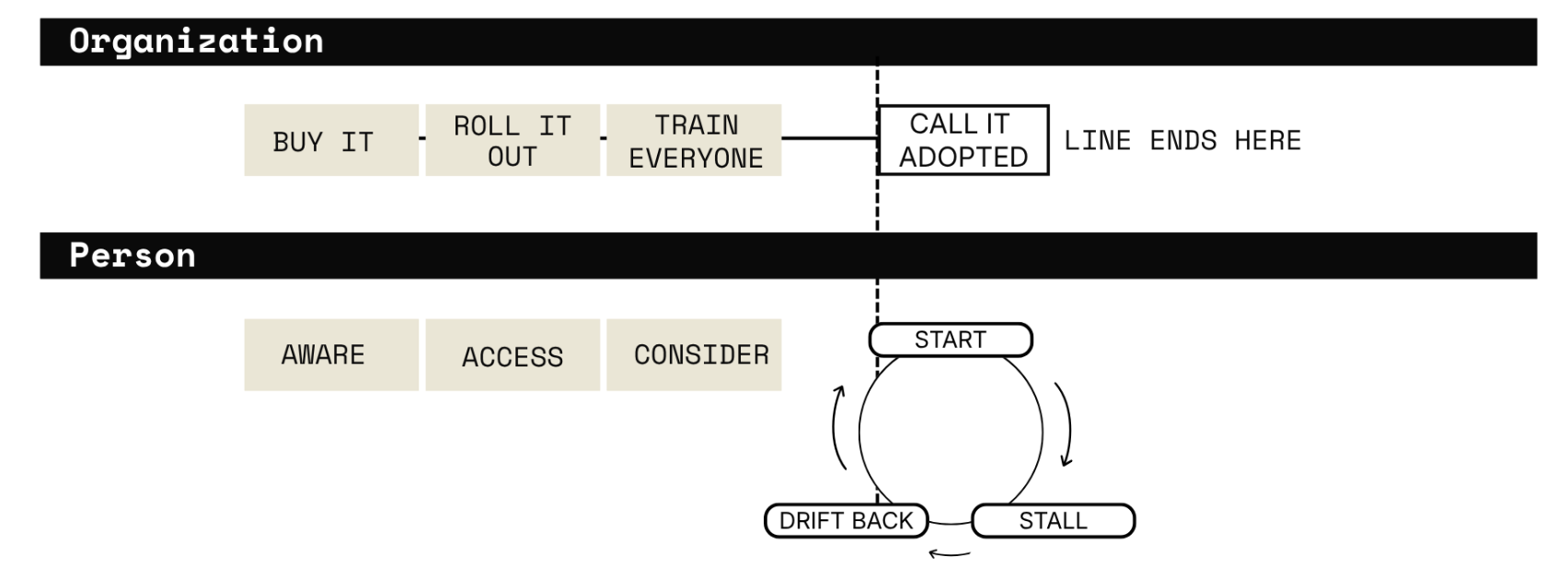
People come back when the conditions change. Every one of those conditions belongs to the organization.
Costs rise on both sides, and not everyone pays the same.
...of companies can trace 5% or more of profit to AI
...abandoned most of their AI initiatives before they ever went live
the workload cost
the social cost
Each cost has more than one source, and many people pay both at once. Figures: McKinsey, The State of AI in 2026; S&P Global Market Intelligence, Voice of the Enterprise, 2025. Full entries in Learning
The costs drop when environments create room for support and allow conditions to change. Returning to AI can be shifted through three core conditions within organizations.
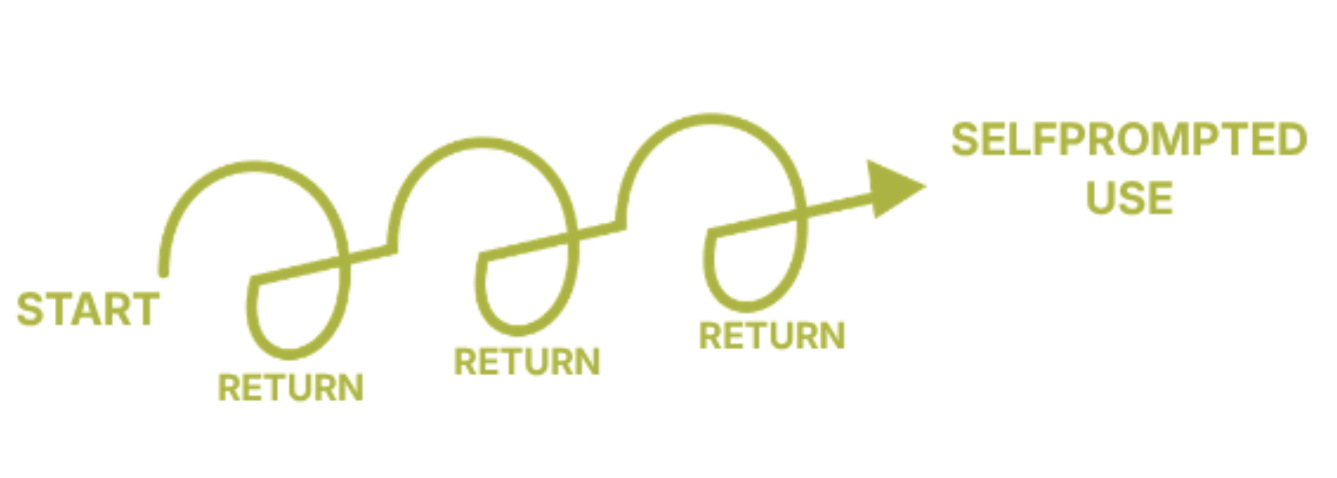
New tools and organizational ways of working get pressure-tested in real conditions and within workflows
Leaders at every level publicly model usage regardless of comfort or expertise
A named owner is accountable for whether people are still using it months later